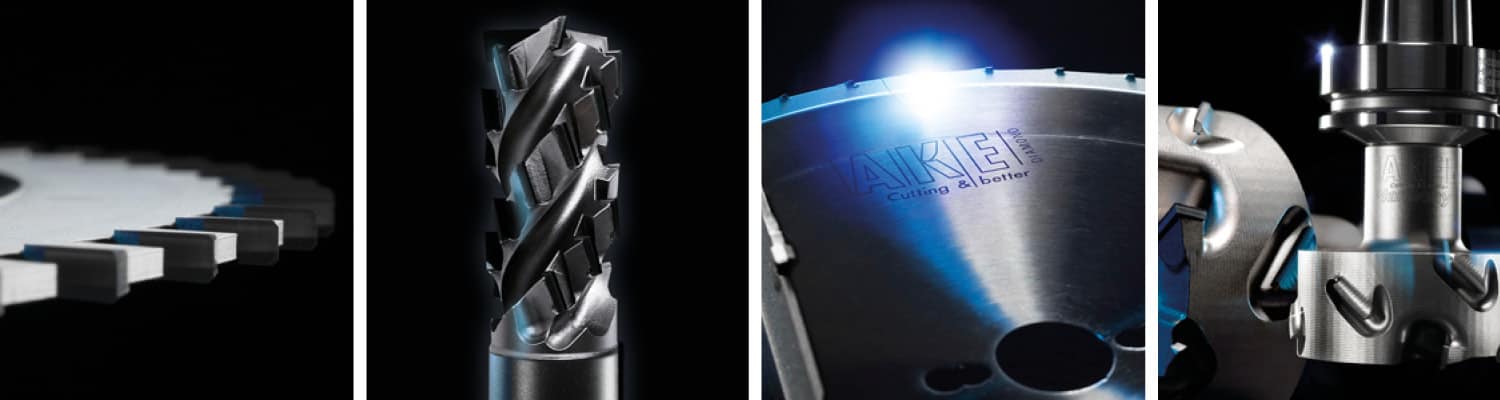
Machining 2.0
"Das Prinzip der Zerspanung 2.0
hat unsere Lehrinhalte
grundlegend verändert!"
- Klaus Schühle


Machining 2.0 – A True Success Story
Forget everything you knew about machining!
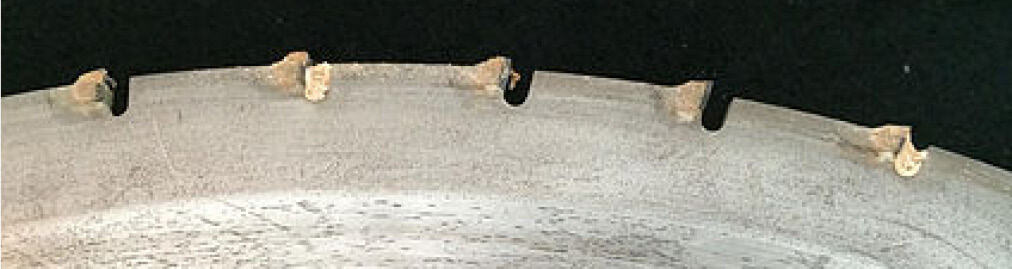
Since the invention of machining, the theory of machining has not changed. It is generally accepted that the cutting edges of a tooth produce a chip. This chip is guided into a chip space located in front of the tooth, held there, and then ejected after the cutting edge exits the workpiece. Ideally into the extraction system.
This principle was never questioned – until AKE presented a world first at the Ligna 2013 trade fair in Hanover and won the Innovation Award.

Previous Approach
The classic-traditional approach strictly assumes that every chip produced by a cut is guided into a chip space located in front of it and ejected after the cut exits the workpiece. AKE questioned this dogma and arrived at extremely interesting findings, which ultimately led to a new generation of saw blades, such as the SuperSilent.
New Era
What makes Machining 2.0 so special is its groundbreaking approach to the type of machining. Whether for circular saw blades, such as the SuperSilent, or the newly developed milling tools for manual and machine infeed. All products have one thing in common: the type of machining is completely different. For this purpose, chip spaces have been rearranged to remove the chip in such a way that
multiple machining is avoided. This significantly improves your cut quality.